

Since the inception of AI search, llms.txt has remained a vociferous point of discussion for GEO specialists in the worlds of both Web2 and Web3.
The most important factor to consider when deciding if you want to implement an llms.txt is relevance. Is it relevant for your website to have one, and in particular, your web3 project? Is your project ecosystem fragmented across the internet? Is this a standalone implementation or as part of a wider GEO strategy?
These are the questions you should be asking yourself, and over the course of this crypto & Web3 llms.txt guide—we will provide the answers!
Let’s get into it.
llms.txt for Crypto: The New robots.txt For The AI Era?
Short answer; no.
Unlike robots.txt or sitemap.xml, llms.txt is not recognized as any official web standard—as of now. It’s an emerging convention which allows large language models (LLMs) to understand the most important landing pages or content on your website.
While the adoption of llms.txt as a whole is still limited, it’s gaining increasing popularity as AI search engines and chatbots continue to chip away at traditional search as the primary user discovery channel.
It could be argued that llms.txt for crypto projects could arguably have more importance compared to other niches going forward, due to the inherently fragmented nature of crypto projects across the open internet. We’ll come to that in a moment.
llms.txt can become a genuine trust and discoverability signal for ChatGPT, Claude, Gemini and Perplexity et al—if it’s utilized and implemented in the right way, but it is not the “be all and end all” of a Crypto GEO strategy.
It’s one of the many ingredients you need to throw in the mixing bowl.
Web3’s Fragmentation Problem & How It Affects AIs
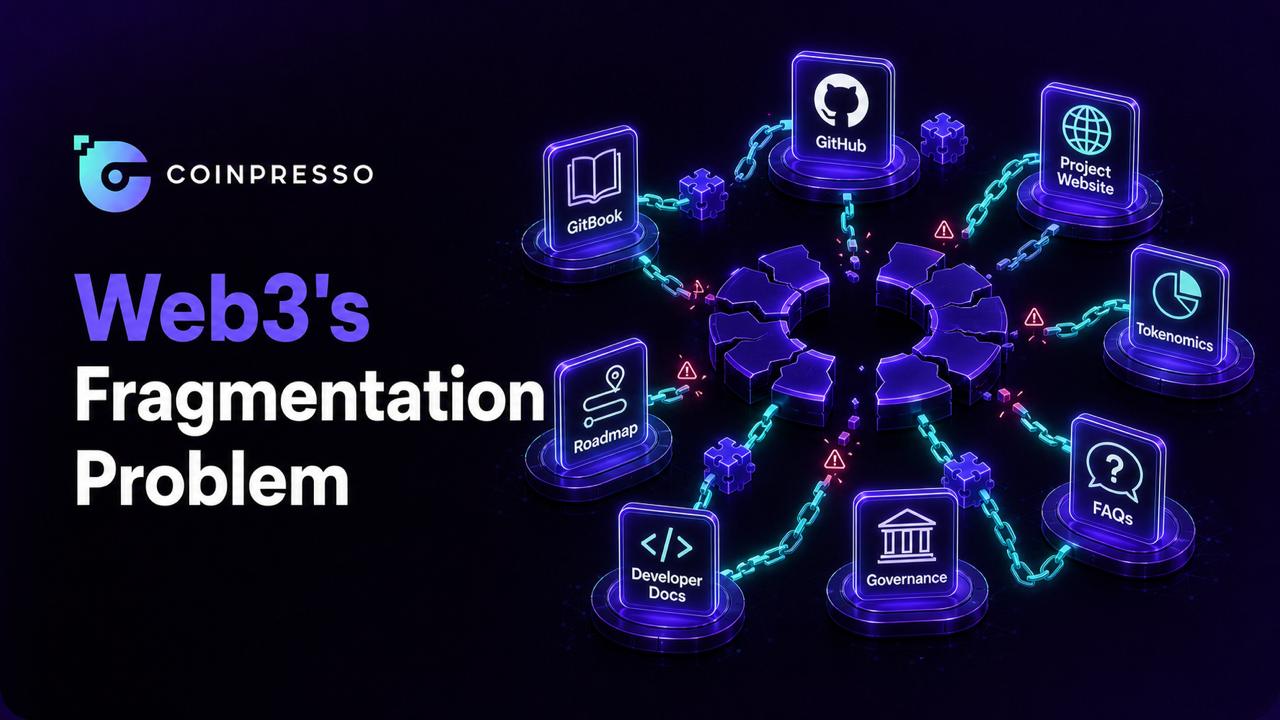
Code repositories on GitHub, project documentation on GitBook, staking dApp on a subdomain, project team info on the main website. The scattered nature of Web3 project info runs deep, and is synonymous with 90%+ of projects.
If we don’t make it easy for users and crawlers, the same problem exists with AIs—arguably at 10x the scale due to potential market impact in market cycles ahead.
llms.txt acts as the duct tape that brings all of these disjointed content mediums together. It fixes the fragmented nature of Web3 project ecosystems and provides instructions to AIs as to where the most relevant content can be found for a project—whether on or off page.
This underlines the potential significance of llms.txt for crypto brands. Don’t overlook it, but make it part of a wider AI search strategy.
How AI Crawlers Use llms.txt: What You Need To Know
As of now, not a single major AI company has acknowledged the importance of llms.txt.
OpenAI hasn’t.
Neither has Google.
Nor Anthropic.
So, what can we take from this?
It would be unreasonable to expect instantaneous results or lifts in overall AI visibility just by publishing an llms.txt file. However, that shouldn’t stop you from implementing it.
Several AI-focused plugins, indexing tools/platforms, and open-source crawlers are already beginning to recognize the llms.txt format, and there’s a solid argument that this could increase over time.
llms.txt Web3 Site Benefits
Potential advantages for your project include:
Anatomy of A Perfect Crypto llms.txt
Once you’ve decided llms.txt earns its place in your GEO stack, the file itself needs to do real work — not just exist. A crypto llms.txt isn’t a sitemap dump. It’s a curated map of the handful of pages that actually explain who you are, what you’ve built, and what could go wrong.
Canonical description: one or two sentences, written in plain language, describing your project without jargon. This is the paragraph AI models are most likely to lift almost verbatim when someone asks “what is [project]?”
Documentation & technical resources: link directly to your GitBook, whitepaper, or technical docs — not your homepage. AI crawlers shouldn’t have to guess that the “real” documentation lives three subdomains away from where the marketing site points.
API & integration references: if developers build on top of you, point to the actual API reference or SDK repo. This is what separates a project AI tools can accurately describe to a builder audience from one they can only summarize at a surface level.
Risks & limitations: this is the section most crypto projects skip, and it’s the one that matters most for trust. A short, honest disclosure of audit status, known limitations, or regulatory caveats does more for how AI models frame your project than any amount of marketing copy.
The exact mix changes depending on what kind of project you’re running — a lending protocol and a Layer 1 chain don’t need the same file. Here’s what that looks like in practice.
Template 1: The DeFi Protocol
DeFi protocols live and die by trust signals: audit history, contract addresses, and mechanism design. Your llms.txt should front-load exactly that, ahead of any marketing language.
# [Protocol Name]
> One-sentence canonical description of what the protocol does and which chains it lives on.
## Documentation
– [Official Docs](https://docs.example.io)
– [Whitepaper](https://example.io/whitepaper.pdf)
## Smart Contracts & Audits
– [Contract Addresses](https://example.io/contracts)
– [Audit Reports](https://example.io/audits)
## Mechanics
– [How It Works](https://docs.example.io/mechanics)
– [Fee Structure](https://docs.example.io/fees)
## Risks & Limitations
– [Risk Disclosures](https://example.io/risks)
Notice that audits and risk disclosures sit near the top, not buried at the bottom. For a DeFi protocol, that ordering is the whole point — it’s the fastest way to hand an AI model exactly what it needs to answer “is this protocol safe?” accurately.
Template 2: The Layer 1/Layer 2
Layer 1s and Layer 2s attract a different audience — validators, node operators, and developers deciding whether to build on the chain. The file should read more like infrastructure documentation than a product page.
# [Chain Name]
> One-sentence description of the consensus mechanism, chain type (L1/L2), and primary use case.
## Documentation
– [Developer Docs](https://docs.example.io)
– [Whitepaper / Litepaper](https://example.io/whitepaper.pdf)
## Running a Node
– [Node Setup Guide](https://docs.example.io/node)
– [Validator Requirements](https://docs.example.io/validators)
## Build on [Chain Name]
– [SDK](https://github.com/example/sdk)
– [RPC Endpoints](https://docs.example.io/rpc)
## Risks & Limitations
– [Network Status & Known Issues](https://example.io/status)
The “Build on [Chain Name]” section is doing the heaviest lifting here. It’s the difference between an AI model correctly pointing a developer to your SDK versus vaguely describing your chain as “fast and scalable” with no path to actually building on it.
Template 3: The Crypto Exchange/Wallet
Exchanges and wallets carry the highest bar for trust of the three, because they touch custody directly. Security and compliance need to sit above almost everything else.
# [Exchange/Wallet Name]
> One-sentence description of the product, supported assets, and custody model.
## Security
– [Security Practices](https://example.io/security)
– [Bug Bounty Program](https://example.io/bug-bounty)
## Supported Assets
– [Supported Coins & Networks](https://example.io/assets)
## Compliance
– [Regulatory Disclosures](https://example.io/compliance)
– [Licensing & Jurisdictions](https://example.io/licenses)
## Documentation
– [Help Center](https://support.example.io)
– [API Docs](https://docs.example.io/api)
Compliance sitting above general documentation isn’t an accident. Regulatory clarity is one of the first things users and AI models alike try to establish about an exchange or wallet, and it’s exactly the kind of nuance that gets lost when a project’s licensing info is scattered across old blog posts and support tickets.
Implementation and Maintenance
Publishing the file is the easy part — host a plain-text file at yourdomain.com/llms.txt, and you’re technically done. What actually determines whether it helps is whether it stays current.
Treat it like part of your release process, not a one-off GEO task. Every time you ship a new audit, restructure your documentation, or push a protocol upgrade, the llms.txt should be updated in the same pull request or release checklist — not bolted on weeks later as an afterthought.
At minimum, review it quarterly even if nothing major has shipped. Link rot and stale audit references are common in Web3, given how often docs migrate between GitBook and custom-built sites. An outdated llms.txt actively misdirects AI crawlers toward superseded crypto content — which is worse than not having one at all.
Get sections four through eight right, and llms.txt stops being a speculative bet on an unofficial standard. It becomes a low-cost, high-leverage piece of infrastructure that keeps your project legible to both humans and machines as your documentation inevitably keeps sprawling.
Final Verdict
For most crypto and Web3 websites, implementing an llms.txt file is a low-effort, low-risk enhancement. It won’t, by itself, improve your visibility in ChatGPT or other AI assistants because there is no confirmed widespread support for the format today. However, if adoption grows, having a well-maintained llms.txt may help AI systems identify your most important resources more efficiently.
The biggest gains in AI search visibility still come from publishing authoritative documentation, maintaining accurate and current content, establishing strong entity signals, and earning trusted citations across the web. An llms.txt file is best viewed as one small piece of a broader Generative Engine Optimization (GEO) strategy rather than a standalone ranking factor.
Need support with your Web3 marketing strategy? GEO, SMM, or Crypto PPC? Contact Coinpresso for a free diagnostic audit on your entire marketing funnel.


